


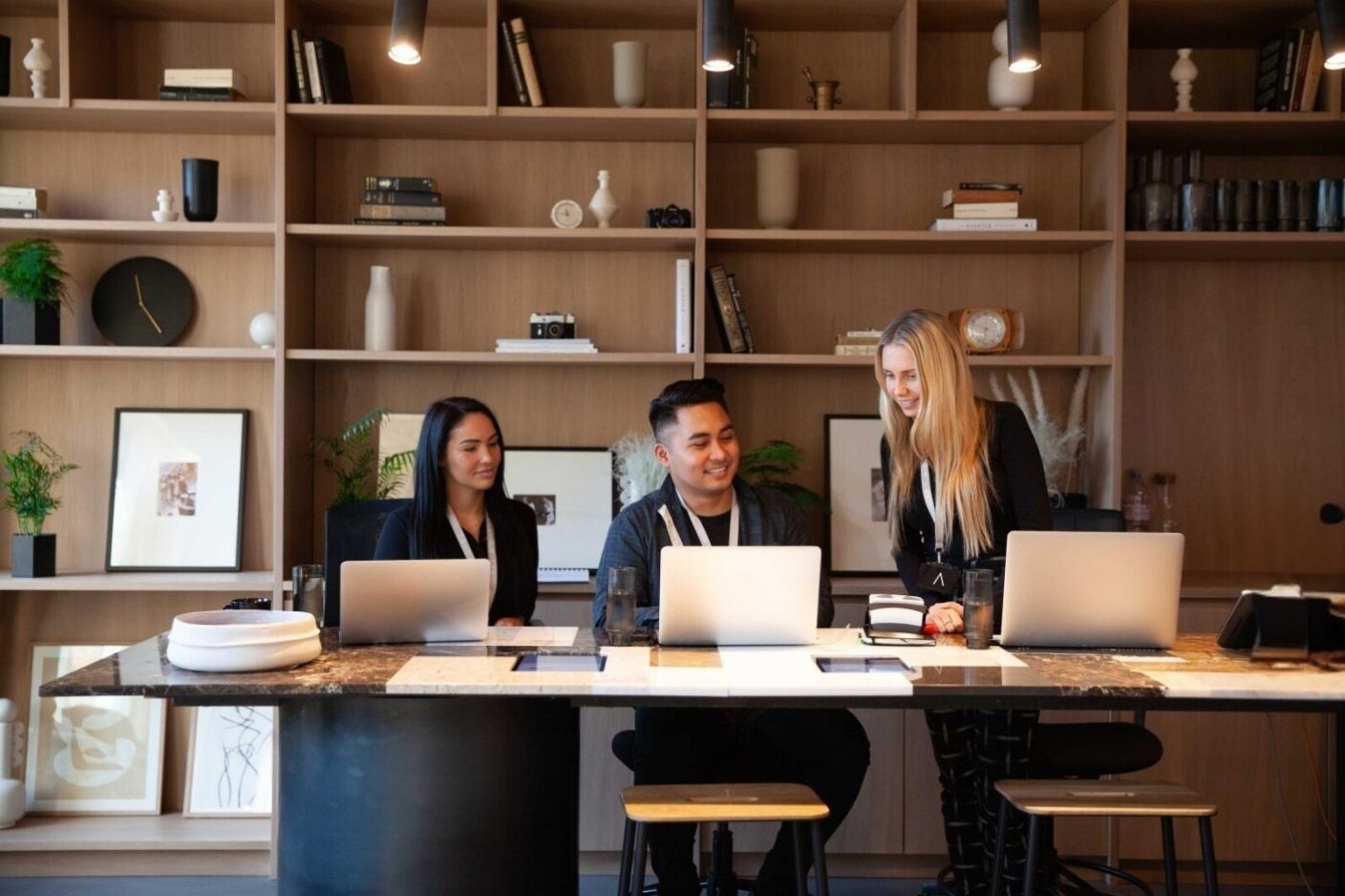
The sector has spent the last eighteen months adopting AI at speed, and the early conclusions are all pointing towards one key principle: machines in the back office, humans at the front desk. It’s a useful starting point but, for extended stay, where guests live with us for weeks or months rather than a long weekend, this is only one chapter of the story. The decisions that matter sit in the detail of which moments we automate, which we keep human, and why.
The relationship arc
Extended stay is a different kind of hospitality. Guests aren’t passing through; they’re settling in. Whether they’re with us for a fortnight, a few months, or returning between commitments, the arc of a longer stay allows for something a shorter stay simply doesn’t have time to build.
At our luxury serviced apartments in Camden, guests have ten, twenty, even fifty subsequent interactions with our front desk team. Familiarity evolves into warmth. The receptionist who remembers your dog’s name in week three, or knows which evening your daughter visits, is doing something that AI structurally cannot replicate. Increasingly, we’re finding that this is something that guests actively value and , when we trialled self-service check-in, uptake was incredibly low.
“People were happy to say hello. They wanted to know someone was there.” Sam Ghosh, VP of Operations, STAY
Research from the University of South Florida earlier this year* found a striking gap between guests’ enthusiasm for AI and that of hotel managers. This was particularly stark when requests carried any emotional weight, such as recommending a restaurant for an anniversary dinner. Across a six-week stay at an aparthotel in London, those moments add up. They can even become the difference between a guest who stays once and one who’s already planning their return.
Where AI earns its place
None of which is an argument against AI. It’s an argument for putting it in the right place. At STAY, that place is consistently behind the scenes.
Our current focus is on upgrading the systems that underpin the guest experience, with AI following naturally from there. The direction is clear: using AI to qualify enquiries faster, so that when a guest speaks to a member of our reservations team, the conversation can be substantive from the first line. We also see AI streamlining how we triage maintenance requests, routing service queries directly to the right people, so our front-of-house team isn’t spending the day passing messages. We’ve also invested in AI-enabled security across our Hawley Wharf site in Camden, designed to give guests genuine peace of mind in a busy, mixed-use part of London.
The unifying principle is simple: AI runs underneath the experience, never on top of it. Guests shouldn’t be able to see it. They should only feel the benefit of the time it gives back, the time our team can spend on the things that make an extended stay feel like home.
Human by design
Some moments are non-negotiably human, and arrival is the clearest of them. At our luxury serviced apartments, we’ve made a deliberate choice that the first welcome is always a personal one, regardless of how slick the alternative could be. Of course, AI can draft a beautifully personalised stay plan, but a member of our team will be the one to walk a guest through it.
The same applies to the smaller, less scriptable moments that define an extended stay in London: the local recommendation that turns out to be perfect, the small kindness on a difficult day, a hand-written birthday card signed by the entire team, the conversation that builds week by week into real rapport. These are not service standards that can be written into a manual. They’re what a team does when they have the latitude and the time. AI buys that time.
There’s a reassurance dimension here too. For solo travellers and guests on long stays, knowing that there’s a real person to turn to isn’t a luxury. It’s part of what makes a building feel safe. The wider industry conversation** has been picking up on this: fully contactless stays can read as unsettling rather than empowering, particularly for solo female travellers. The presence of people, visible and approachable, matters to us and to our guests.
This also reshapes the skill set we hire for. As AI absorbs the administrative load, our front-of-house roles tilt further toward judgement, emotional intelligence and local knowledge, the things that make extended stay accommodation feel less like a rental and more like a neighbourhood.
Handmade hospitality
As AI saturates the sector, choosing not to automate certain touchpoints starts to look less like nostalgia and more like a statement of quality. In other categories, “handmade” has become its own kind of luxury, a signal that someone chose the slower, more human option with intention. We think that hospitality is heading in the same direction.
The brands that thrive over the next few years won’t be the ones that automate hardest. They’ll be the ones that draw the line most thoughtfully. For us at STAY, that means managed apartments in Camden where technology earns its place behind the scenes, and our team is always the heart of the experience.
“There’s a difference between seamless and soulless. People might appreciate speed, but very few prefer feeling like no one is there.” Sam Ghosh, VP of Operations, STAY
* https://phys.org/news/2026-02-hotel-guests-embrace-ai-convenience.html
** The Changing Face of Travel and Hospitality: Responding Through Design — Design Insider, 17 March 2026.
Discover STAY Blogs
Lorem Ipsum dolor mannga bagoong